Inter Miami vs Tigres UANL Timeline: Key Moments You Can’t Miss
Inter Miami vs Tigres UANL Timeline is the talk of football fans everywhere. But it’s not just about the final score. The timeline of events shows why this match is trending—it reveals momentum shifts, star moments, and high-pressure decisions that left fans on the edge of their seats. Let’s break it down so you can see exactly what happened, why it mattered, and what it means for the future of North American football.
What Happened in the Match
Early Game: Setting the Tone – How Inter Miami controlled possession and Tigres stayed compact
They controlled the ball carefully, moving it across the field with short, precise passes. The goal was simple: keep possession, probe for gaps, and avoid unnecessary mistakes. Tigres, meanwhile, stayed compact, protecting their defensive lines and waiting for chances to counterattack. This early phase felt like a chess match. Miami moved deliberately, while Tigres watched, looking for openings to exploit.
By the 20th minute, it was clear that Miami’s patient buildup was paying off. Their midfielders acted as the link between defense and attack, maintaining control of the game’s tempo. Tigres didn’t panic. They positioned themselves smartly, blocking key channels and forcing Miami to play around them. Every off-ball run, interception, and pass mattered, shaping the match’s rhythm before any goals were scored. For fans watching, the tension built quietly, without flashy moments, but every move had purpose.
Think of it like running a project at work. You don’t rush; you plan, watch, and act strategically. Miami’s careful buildup and Tigres’ defensive discipline created the perfect opening act. The foundation was laid, and the stage was set for the thrilling events to follow.
Mid-Game Shifts – Momentum swings and key plays that changed the flow
Around the middle of the match, things started to change. Tigres pushed higher up the field, increasing pressure on Miami’s defense. Quick passes, sharp runs, and coordinated pressing tested Miami’s composure. At the same time, Miami made key substitutions. New players added speed and creativity, giving the team fresh attacking options. The midfield became more dynamic, and the flow of the game started shifting back and forth.
Momentum swung like a pendulum. One moment, Miami dominated possession; the next, Tigres controlled the ball and threatened the goal. Fans watching could feel the tension rise with every pass and tackle. It wasn’t just about skill—it was about stamina, timing, and tactical awareness. Tigres’ urgency to equalize created spaces, while Miami’s patience and calm decision-making allowed them to respond effectively.
This period highlights how small tactical changes can have big consequences. A single substitution, a shift in formation, or a slight adjustment in pressing can alter the balance of the game. For casual viewers, it might seem like chaos, but for analysts and players, these shifts are carefully orchestrated.
Late Game Drama – VAR review, decisive penalty, and the winning moment

At the 67th minute, Tigres scored an equalizer, leveling the score and swinging momentum in their favor. The game became tense and nerve-wracking. Fans were glued to their screens, and both teams intensified every attack and defensive move. Then came the decisive moment: in the 89th minute, a handball by Tigres in the penalty area triggered a VAR review. After careful consideration, the referee awarded a penalty to Miami.
Luis Suárez stepped up and converted it calmly, giving Inter Miami the 2–1 lead. The stadium erupted. What makes this moment remarkable isn’t just the goal—it’s the composure under pressure. Miami had been patient all game, and that patience paid off in the crucial moment. Tigres had no time to respond, leaving Miami to celebrate a hard-fought victory.
It’s like finishing a tight exam or a project under a looming deadline. One critical move, executed with calm and precision, changes everything. For fans, it was unforgettable. For analysts, it demonstrated the power of strategy, discipline, and mental toughness in high-stakes situations.
Key Players Who Shaped the Match
Offensive Impact – Luis Suárez, Messi, and critical attacking moves
Offense made the difference in this game. Luis Suárez scored both goals, including the late penalty that secured the win. Messi’s presence opened spaces and drew defenders, creating opportunities that Miami could exploit. Together, they combined skill and strategy, timing their movements perfectly to maximize impact.
Tigres also had talented attackers, but Miami’s coordination and awareness kept them largely contained. It wasn’t just individual brilliance—it was teamwork. Suárez, Messi, and the midfield worked in sync, anticipating each other’s movements and maintaining balance. Without this coordination, the star moments might not have translated into goals.
Real-life example: think of a group project where two strong members collaborate seamlessly. Their impact is amplified because they understand each other and work toward the same goal. That’s exactly what Miami’s attack showed—planning, skill, and smart timing.
Defensive Influence – How both defenses held under pressure
Defense was just as important as offense. Miami’s backline stayed organized, intercepting Tigres’ passes and blocking dangerous runs. Tigres’ defenders and midfielders disrupted Miami’s rhythm, forcing the team to adjust their approach constantly. Both teams’ defensive discipline kept the scoreline tight and the game tense.
Strong defense is like a safety net. Even the best attackers can’t succeed without support. By maintaining structure and communicating effectively, both teams prevented easy goals and forced smart, calculated plays. It was a display of patience, awareness, and teamwork under constant pressure.
Minute-by-Minute Timeline Highlights
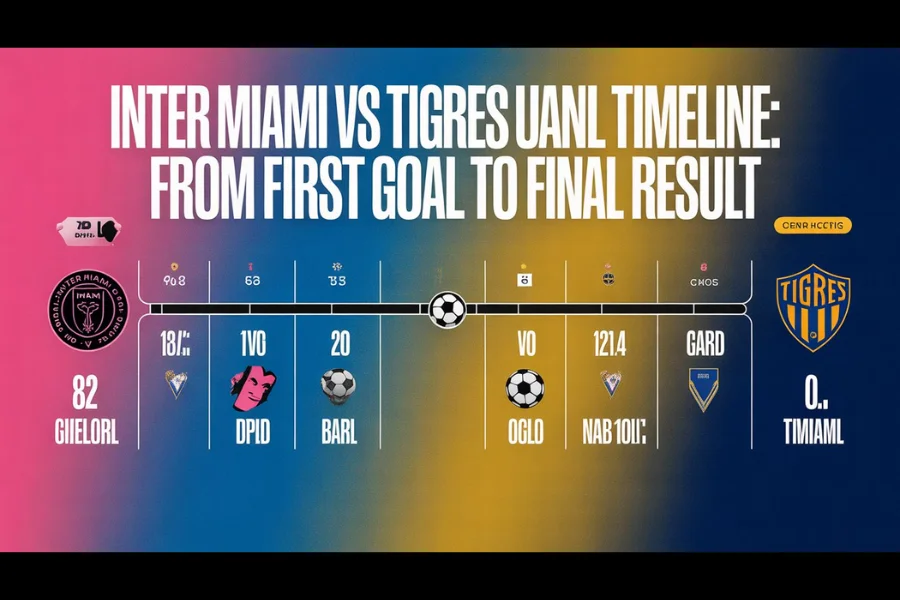
| Minute | Event | Impact |
|---|---|---|
| 23’ | Penalty goal by Luis Suárez | Miami takes early momentum |
| 45’ | Halftime adjustments | Teams reset strategy |
| 67’ | Tigres equalizer | Shifts momentum and confidence |
| 70’ | Key substitutions | Changes attacking dynamics |
| 89’ | Late penalty goal by Suárez | Secures Miami’s win |
Watching a timeline like this helps fans and analysts follow how each key moment influenced the outcome. Every goal, substitution, or defensive move played a role in shaping the match.
Why the Timeline Is Trending Now
The Inter Miami vs Tigres UANL timeline is trending for more than just a few big plays. First, the sheer star power of players like Lionel Messi and Luis Suárez attracts attention worldwide. Even casual fans who don’t follow MLS closely are tuning in just to watch them in action. Every dribble, pass, and goal generates highlights that spread across social media instantly, making the game feel like a global event. The presence of these stars elevates ordinary moments into viral content, which is why this match’s timeline is circulating widely online.
Second, the growing rivalry between MLS and Liga MX is adding context that makes the timeline even more interesting. What was once a regional contest is now a match with international attention. Fans and analysts are closely watching how the leagues compare in terms of skill, tactics, and intensity. This rising competition makes every goal, substitution, or momentum swing feel significant, not just for the teams but for the leagues themselves.
Third, tactical surprises throughout the game made it unpredictable. Substitutions, defensive shifts, and changes in pressing patterns created dramatic swings in control. Even seasoned analysts were surprised at how quickly the momentum changed. For fans watching live or online, it felt like a constant back-and-forth battle that could go either way. The combination of star players, growing league rivalry, and tactical unpredictability makes this timeline captivating, which explains why it’s trending across social media and sports discussion forums.
What Fans and Analysts Are Saying
Fans and analysts alike have been buzzing about this game, and for good reason. Social media exploded with reactions, ranging from clips of Messi’s ball control to Luis Suárez’s decisive penalty. Memes, commentary threads, and highlight compilations spread quickly, showing how much people were invested. Even casual viewers were drawn in by the intensity and drama, while hardcore fans analyzed every move and tactic. The excitement around this match shows how a well-played game can unite viewers across different countries and fan communities.
Analysts are particularly focused on the tactical lessons from the match. Inter Miami’s controlled possession and strategic patience stood out, while Tigres’ disciplined defensive setup and counterattacks forced Miami to adapt constantly. Experts highlighted how each team’s ability to read the opponent and adjust formations mid-game was critical. They also noted that small moments—like the timing of a substitution or a defensive shift—can have outsized effects on outcomes. These observations are important because they reflect larger trends in North American football, where strategy and preparation increasingly match raw talent.
Fans also noticed the psychological aspect. Momentum swings, high-pressure situations, and late-game drama created real emotional highs and lows. The combination of strategy, star players, and unpredictable moments made this match feel like a must-watch event. This is why discussions about the timeline are everywhere: fans share their favorite clips, analysts dissect plays, and everyone has something to debate.
Lessons From the Match
This match offers several lessons for teams, players, and fans. First, strategy and patience often outweigh brute force or speed. Inter Miami demonstrated that careful buildup, controlled possession, and reading the opponent can create opportunities even against a strong team like Tigres. Rushing forward without planning might have led to mistakes, but measured play kept Miami in control for much of the game.
Second, small moments can decide big games. A handball, a well-timed pass, or a substitution at the right moment can dramatically shift momentum. In this match, the 89th-minute penalty was decisive, but it was only possible because Miami maintained composure and created the conditions for that opportunity. It shows that no detail is too small when the stakes are high.
Third, adaptability under pressure is critical. Both teams faced high-intensity moments where quick decision-making mattered. Players who could read the field, anticipate opponent moves, and adjust on the fly had a clear advantage. In real life, this is similar to staying calm and flexible when a project or deadline suddenly changes. Teams that can pivot without panic often outperform even the most talented opponents.
Overall, the game proves that football is more than just skill; it’s also mental toughness, awareness, and patience. Talent alone isn’t enough—success comes from a combination of preparation, teamwork, and smart reactions under pressure.
What This Means for the Future

Looking ahead, the Inter Miami vs Tigres UANL match signals a bigger shift in North American football. Expect more cross-league games between MLS and Liga MX teams. These matches will attract global attention, bringing more fans to stadiums and streaming platforms. Clubs are beginning to recognize that high-profile matches like this are not just about points—they’re about branding and building an international following.
Star players will continue to play a central role. Teams will increasingly rely on their presence to influence outcomes, attract viewers, and create highlight-worthy moments. At the same time, tactical flexibility will become even more important. Coaches will need to plan for unexpected scenarios and make in-game adjustments quickly. Teams that combine star talent with disciplined strategy will have a clear edge.
For fans, this means more thrilling, strategy-heavy matches. For players, it emphasizes preparation, teamwork, and staying calm under pressure. The Inter Miami vs Tigres UANL timeline is a preview of the future: faster, more competitive, and more globally relevant football in North America. Every goal, substitution, and defensive move will be analyzed and shared widely, showing how the sport continues to grow.
Final Words
The Inter Miami vs Tigres UANL match had fans on the edge of their seats. From Messi’s creativity to Luis Suárez’s decisive goals, every moment mattered. Early on, Miami controlled possession carefully while Tigres stayed compact, waiting for the right chance to strike. By mid-game, momentum swung back and forth as substitutions and tactical shifts changed the flow.
The late-game drama was unforgettable. Tigres equalized at the 67th minute, but a handball in the 89th led to a VAR-reviewed penalty. Suárez calmly converted it, securing Miami’s 2–1 win. Both teams’ defenses were crucial, keeping the match tense and strategic.
Fans flooded social media with highlights and debates, while analysts praised the tactical battles and adaptability on display. This game shows that in North American football, star talent, strategy, and mental toughness are equally important. With cross-league matches on the rise, fans can expect more high-stakes, thrilling football in the future.
Thanks for reading with Standard Magazine — we’re here to keep you informed, aware, and thinking.